The name Gessolini is so very quiet and almost akin to a poem. It is a term that most individuals come across in design blogs, interior inspiration boards, lifestyle articles, or branding dialogues and they often have the question of what it entails. Is it a material? A design movement? A brand concept? Or a modern word coined to illustrate this or that emotion?
The fact is that Gessolini is never a strict dictionary word and it has only one meaning. In its place it has become a modern design and the way of life, and it is used to refer to a certain method of thinking about beauty, materials, space, and purpose. It unites concepts of minimalism, texture, craftsmanship, and eternal beauty in a manner that is soft, as opposed to hard.
This article explores Gessolini in detail, its meaning, its potential sources, its overall design philosophy and its application today in interiors, fashion, product and digital branding. All the information is presented in plain, everyday language that any person can comprehend and use the concepts without any design background.
What Does Gessolini Mean?
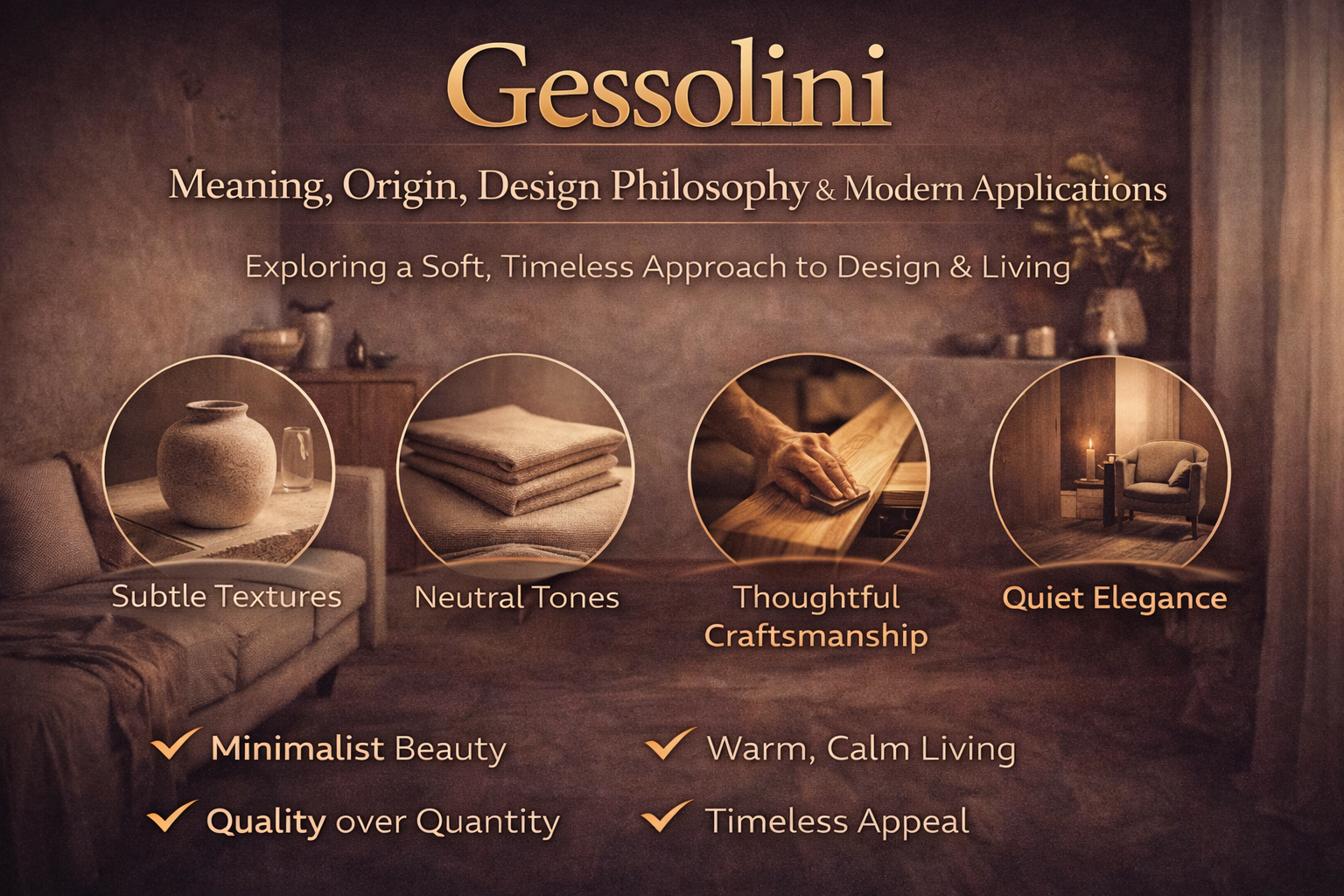
In its simplifying form, Gessolini refers to a soft, elegant, minimalist design philosophy, which appreciates the value of texture, balance and tranquility over the overt decoration or rapid fashion.
Instead of emphasizing the use of dramatic colors or patterns, which are eye catching, Gessolini emphasizes:
- Subtle textures
- Neutral and earthy tones
- Thoughtful craftsmanship
- A sense of quiet elegance
The word is frequently used by people who tend to say that something seems purposeful, intimate, and eternal, although it may seem simple at the first sight.
In everyday terms, Gessolini can be understood as:
“A way of designing and living that chooses fewer things, better materials, and calmer spaces.”
The Possible Origin of Gessolini
The creation of Gessolini is not recorded in any official historical design textbook, this is the reason why you might encounter varying descriptions on the internet. Nevertheless, there are some similar strings which can be used to describe the origin of the idea.
The Italian gesso, meaning a chalky or plaster-like substance, traditionally applied as a base layer in art and decorative finishes is one of the strong influences. Gesso in painting, sculpture, and the interior has a long history of use due to its smooth matte surface which adds texture and light.
Must Read: Miriam Steyer: The Mother Behind the St. Brown Legacy
The idea that Gessolini developed into a modern Italian-inspired word which manifests this plaster-like softness and concern with the surface quality is held by many design writers. The term has grown to be a wide design philosophy over the years and is no longer tied to materials.
The other reason as to why the origin is ambiguous is that Gessolini seems to be a modern construct, molded to the online design culture and not a single historical movement. Similar to a lot of contemporary terminology, it was defined by application, repeated use, and mutual agreement and did not have one official definition.
Why Gessolini Feels So Relevant Today
In order to comprehend the reasons why Gessolini appeals to people today, one can look at the world we live in.
Modern life is loud. Notifications, glowing screens, rapid trends, and constant demands to consume more are the staples of our environment. As a reaction, a lot of individuals are seeking areas and items that can assist them to pace down.
Gessolini would fit well into this kind of mentality since it provides:
- Visual calm in busy environments
- Simplicity without emptiness
- Beauty without excess
- Comfort without clutter
It is not about showing off. It is rather about creating, not good to photograph in, but good to live in.
The Core Design Philosophy of Gessolini
At the heart of Gessolini is a philosophy built on a few simple but powerful ideas. These ideas can be applied to homes, clothing, products, and even digital spaces.
Less, But Better
Gessolini is a firm believer of the fact that quality is even more important than quantity.
Rather than crammed with ornaments, this approach makes the person consider a small number of meaningful objects that were made thoughtfully. The same concept is applicable to clothing, furniture and even daily tools.
This ideology aids to minimize wastage, decision fatigue, and visual stress. The less things are competing to capture the attention, the more time objects breathe in.
Texture Over Decoration
Gessolini does not depend on patterns or bright colors, but she makes use of the texture to create interest.
Texture might come from:
- Plaster or limewashed walls
- Natural wood grain
- Handmade ceramics
- Linen, cotton, or wool fabrics
The materials are light sensitive and vary slightly during the day, thus making a space to be alive but not busy.
Timelessness Instead of Trends
Trends come and go quickly. An environment that is trend-oriented tends to be obsolete in a couple of years.
Gessolini avoids this by focusing on timeless elements:
- Neutral color palettes
- Simple forms
- Natural materials
- Balanced proportions
It is not to appear stylish within a single season but to be comfortable over a long period of time.
Warm Minimalism
Minimalism is usually misconstrued as cold, or empty. Gessolini gives it more of a warm version.
This approach allows:
- Empty space, but not loneliness
- Simplicity, but not sterility
- Calmness, but not boredom
It demonstrates that even a modest design may be inviting, personal and humanly touching.
Craftsmanship and Human Touch
Respect of craft and skill is another major concept of Gessolini.
Handcrafted or quality-made products usually possess minor flaws. Gessolini glorifies them rather than covering them up. This information makes us remember that something was created not by a machine that tries to achieve perfection, but by a person.
This respect towards craftsmanship is also conducive to sustainability, as well-crafted things are more likely to have a longer life, as well as they will age better.
Gessolini in Interior Design
Interior design is where Gessolini is most commonly applied and most easily recognized.
Gessolini-Inspired Walls and Surfaces
In this style, the walls have a significant role. Gessolini-inspired interiors tend to use instead of glossy paint or a crowded wallpaper:
- Matte finishes
- Subtle plaster textures
- Soft, uneven surfaces
These surfaces respond to the light softly and create the depths in the rooms without decoration.
Furniture Choices in Gessolini Spaces
Furniture in Gessolini-style interiors is usually:
- Simple in shape
- Made from natural materials
- Comfortable rather than flashy
The focus is on proportion and function.The chair does not have to be dramatic to be beautiful, it must only feel good to sit in and appear to be in harmony with the room.
Color Palettes in Gessolini Interiors
Color choices are calm and grounded. Common tones include:
- Soft whites
- Creams and off-whites
- Warm beiges
- Muted greys
- Earthy browns
The colors used are like a blank canvas that enables the texture and light to be more prominent.
Gessolini in Fashion and Personal Style
Gessolini also has a presence in the world of fashion and in particular in the discourse of slow fashion and sustainable wardrobes.
Clothing with a Gessolini Mindset
In fashion, Gessolini-inspired style focuses on:
- Clean cuts
- Natural fabrics
- Neutral colors
- Versatile pieces
Rather than spending a lot of money on fashionable products, individuals who adhere to this style tend to have a limited collection of high-end basics, which can be used over a long period of time.
The Emotional Effect of Gessolini Fashion
People who adopt this style often describe feeling:
- More confident
- Less stressed about trends
- More connected to their clothing
Comfortable, well-made and correctly matched to personal values, clothes help to facilitate the everyday life instead of making it more complicated.
Gessolini in Product and Industrial Design
Product designers are also drawn to Gessolini principles, especially in tools, home goods, and everyday objects.
Simple Objects That Feel Good to Use
A Gessolini-inspired product is often:
- Easy to understand
- Pleasant to touch
- Built to last
- Free of unnecessary features
This is a style that emphasis is on user experience rather than complexity. This is because a product does not have to be everything, it only has to work well in what it is doing.
Gessolini in Digital Design and Branding
Although Gessolini is closely related to the physical texture, it can be applied to the digital space, as well.
Calm Digital Interfaces
Websites and apps inspired by Gessolini often feature:
- Clean layouts
- Generous spacing
- Soft colors
- Minimal visual noise
This produces some feeling of reliability and comfort, which is highly valued in a digital age full of distractions.
Branding with Gessolini Values
Brands using this approach often communicate:
- Authenticity
- Sustainability
- Quality
- Long-term thinking
Their visuals are calm and refined, and their messaging avoids exaggeration or aggressive marketing.
A Simple Anecdote: Why Gessolini Feels So Appealing
Many people discover Gessolini ideas without knowing the word itself.
They enter a calm, properly furnished area, just after a tiresome stressful day. The room is not overly illuminated with soft light, with textured walls, and few objects have been chosen carefully. And all at once they are less tense without understanding why.
It is just that feeling Gessolini wants to develop not excitement but relief.
How to Apply Gessolini in Everyday Life
There is no need to have a large budget, or a design degree in order to apply these ideas.
Start by Removing, Not Adding
The initial move is usually eliminating clutter. Clear surfaces, donate items that are not used and allow space an opportunity to breathe.
Choose One Quality Upgrade
Rather than making all the changes at once, select one significant enhancement:
- A well-made lamp
- A textured throw
- A handcrafted bowl
Even little changes may make a huge emotional difference.
Pay Attention to Light
There is natural and warm lighting, which contributes to the texture and inviting space. Even switching a light bulb can alter the atmosphere of a room.
Focus on How Things Feel
When choosing objects, ask:
- Does this feel good to touch?
- Does it feel calm or noisy?
- Will I still like this in five years?
These questions align naturally with Gessolini values.
Is Gessolini a Trend or a Lasting Idea?
Is Gessolini a Trend or a Lasting Idea?
While the word itself may be new, the ideas behind Gessolini are not. People have always appreciated simplicity, handcrafted things, and equilibrium, particularly at the moment of transformation and anxiety.
It is the reason why Gessolini is more of a reaction than a trend to the contemporary overload. Although the name may change or be forgotten, the philosophy behind it would probably still be useful.
Final Thoughts on Gessolini
Gessolini can be interpreted as the present-day design and style of life philosophy as opposed to a prescriptive style guide. It teaches to have a low profile instead of a high profile, quality rather than quantity, thought rather than impulse.
Gessolini provides a reminder that beauty does not have to shout whether deployed on homes, fashion, products or online. The simplest of design options can sometimes be to make room to allow peace.
When you live or create with these principles, you might discover that your spaces are lighter and more refreshing and purposeful as well as your day-to-day life.